Breast Pain While Breastfeeding: When Is It Normal and When Should You Worry?
Breast pain during breastfeeding is common. For most women, it relates to normal lactation changes or benign conditions. However, during pregnancy and the postpartum period, breast cancer can still occur — and symptoms can sometimes be mistaken for breastfeeding-related issues.
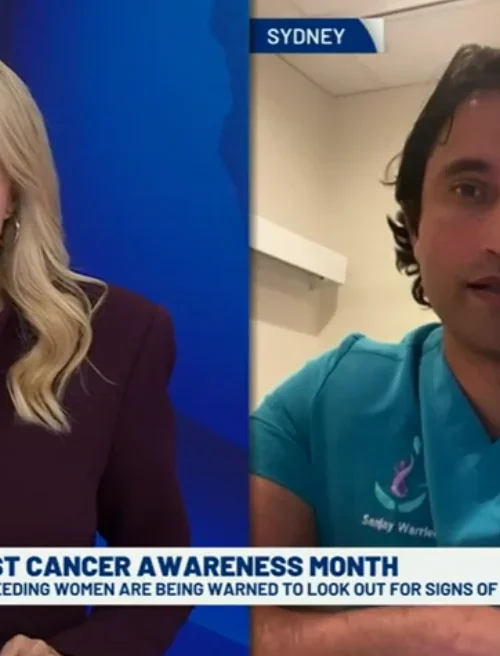
In a recent national interview with Angela Bishop on 10 News during Breast Cancer Awareness Month, Associate Professor Sanjay Warrier discussed when breastfeeding pain is expected — and when it should be properly assessed.
Is Breast Pain During Breastfeeding Normal?
Yes — in many cases, breast discomfort while breastfeeding is completely benign.
Common non-cancerous causes include:
- Breast engorgement
- Blocked milk ducts
- Feeding technique issues
- Mastitis (breast infection)
- Breast abscess
As A/Prof Warrier explains:
“The commonest reasons are benign and non-cancerous.”
Inflammation, swelling and temporary lumps are frequent in the early weeks of breastfeeding. Most will resolve with appropriate management, feeding support and, where required, antibiotics.
However, not every lump or area of redness should automatically be attributed to breastfeeding.
When Should You Worry About a Lump While Breastfeeding?
While breast cancer during pregnancy or postpartum is uncommon, it does occur. The challenge is that symptoms can overlap with common breastfeeding conditions.
A/Prof Warrier advises:
“If there’s a persistent lump or ongoing redness that’s resistant to antibiotics then it’s definitely a reason to be concerned.”
Importantly, persistent symptoms should not be ignored — even if you are actively breastfeeding.
You should seek medical assessment if you notice:
- A lump that does not resolve
- A lump that is getting larger
- Redness that does not improve with treatment
- A painful or painless lump that persists
- Any breast change that feels unusual for you
As he notes:
“If you do have a lump that is not resolving… it’s important to get it checked out.”
How Quickly Should You See a Doctor for Breast Pain?
Context matters. Most breastfeeding lumps are not cancer.
But if symptoms are not settling, do not delay review.
“Commonly it won’t be breast cancer but if you do have a lump that is not resolving then I would recommend seeing a specialist through your lactational consultant, GP or breast specialist — it’s important to get it checked out.”
Your GP is typically the first step. From there, appropriate referral for imaging or specialist review can occur.
Early assessment provides reassurance in benign cases and ensures prompt management when further investigation is needed.
Is Breast Cancer Harder to Detect While Breastfeeding?
Breast imaging during lactation can be more challenging.
Breast tissue becomes denser while breastfeeding, which can make mammography more difficult to interpret.
As A/Prof Warrier explains, “often the breasts are denser… mammograms [can be] harder to do but we can still do an ultrasound.”
Ultrasound is commonly used in breastfeeding women and is very useful for assessing lumps. If imaging shows a solid component, further investigation may be recommended.
“If there is a solid component, we would then consider potentially biopsy-ing the lesion.”
Breastfeeding does not prevent appropriate imaging or investigation.
Breast Cancer Awareness Month: Why Early Detection Matters
During Breast Cancer Awareness Month, A/Prof Warrier’s message is clear: early diagnosis changes outcomes.
A/Prof Warrier says “when they are diagnosed with early breast cancer it really does change the outcomes for those patients.”
Many women in the postpartum period are focused on caring for their baby and family. Health checks can be delayed.
“Often women are looking after their families, and they’re very busy but it really is a time to get checked” pleads A/Prof Warrier.
Australia has a strong national breast screening program, offering free mammographic screening for eligible women. Even if you have no symptoms, staying up to date with screening is important.
Detecting breast cancer early can mean:
- Less extensive surgery
- Reduced need for chemotherapy
- Lower risk of spread to lymph nodes
- Improved long-term outcomes
We are potentially seeing cancers before they begin to hit the lymph nodes or go to other parts of the body which allow for less treatments for the patients.”
Key Takeaways: Breastfeeding and Breast Health
- Most breast pain during breastfeeding is benign
- Persistent lumps should not be ignored
- Redness resistant to antibiotics needs review
- Ultrasound is effective in breastfeeding women
- Early diagnosis improves outcomes
If something feels different or is not resolving, seeking medical advice is the safest step.
Are You Concerned About a Breast Lump While Breastfeeding?
If you are experiencing ongoing breast pain, a persistent lump, or changes that are not settling, speak with your GP promptly.
Early assessment provides clarity and peace of mind.
Warrier Practice provides specialist breast assessment and surgical care. A GP referral is required.
📞 Contact Warrier Practice to arrange an appointment following GP review.
Your health matters — especially while caring for others.